
Introduction:
In modern agriculture, especially in polyhouse farming and Controlled Environment Agriculture (CEA), managing climate is the key to achieving high yield and quality. While most growers focus on temperature and humidity separately, the real factor that controls plant health is Vapor Pressure Deficit (VPD).
A limitation of RH is that the amount of water vapor that air can hold increases with temperature. Because of this dependence on temperature, RH is not a consistent metric to describe the potential loss of water by plants to the air.
That's why understanding a VPD gives you a edge overs the other changing factors in the CEA or the macro climate management.
What is VPD?
Vapor Pressure Deficit is the difference between amount of moisture present in the air and how much moisture air can hold when it is fully saturated.
In simple words VPD tells you how thirsty the air is for the water.
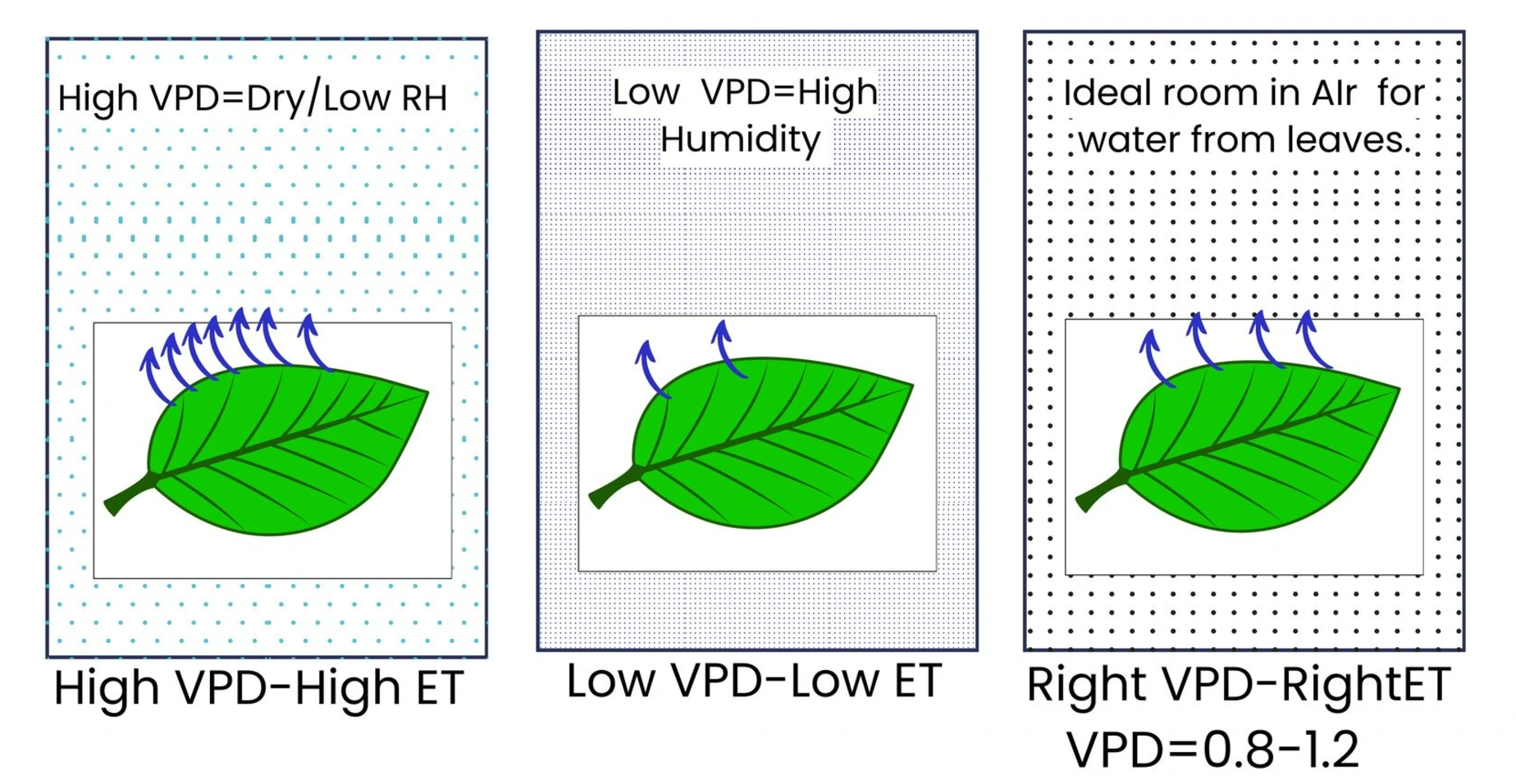
- Low VPD → Air is humid (less water demand from plant)
- High VPD → Air is dry (more water demand from plant)
In a general rule cutting or the plants in establishment requires low VPD that means the high relative humidity that prevents cuttings or the small establishment stage plants from drying out. In general rule a VPD of the 0.8 to 1.2 KPa (kilopascal) is considered ideal for wide range of plants to grow.
Why is VPD Important for Plants?
Although large quantities of water are absorbed by plant from the soil but only a small amount of it is utilized. The excess of water is lost from the aerial parts of plants in the form of water vapors this process is called as the transpiration.
Of all water absorbed plant almost losses almost losses 90% of water through this process.
Why is VPD Important for Plants?
1.Controls Water Movement
Proper VPD ensures smooth water movement from roots to leaves
Helps in nutrient uptake
2. Affects Photosynthesis
Balanced VPD keeps stomata open
Improves CO₂ intake and photosynthesis
3. Reduces Disease Risk
Low VPD (high humidity) → fungal diseases increase
Correct VPD → healthier plants
What should be the ideal VPD?
When VPD is lower then 0.7 KPa except when the plants are in the propagation or the seedling stage, some fungal pathogens may be problematic and also nutrient uptake may also may not be sufficient . Also when the VPD is Higher than 1.5 KPa rate of water loss is very high and in some cases the photosynthesis rate may decrease or slow down .
Sr. No | Growth Stages | Ideal VPD ranges in (KPa) |
1 | Seedling Stage | 0.4-0.8 |
2 | Vegetative Stage | 0.8-1. 2 |
3 | Flowering / Fruiting Stage | 1.0-1.5 |
How to Calculate VPD?
While manual calculation of Vapor Pressure Deficit (VPD) is useful for understanding the concept, in practical farming it is often calculated using simpler and faster methods.
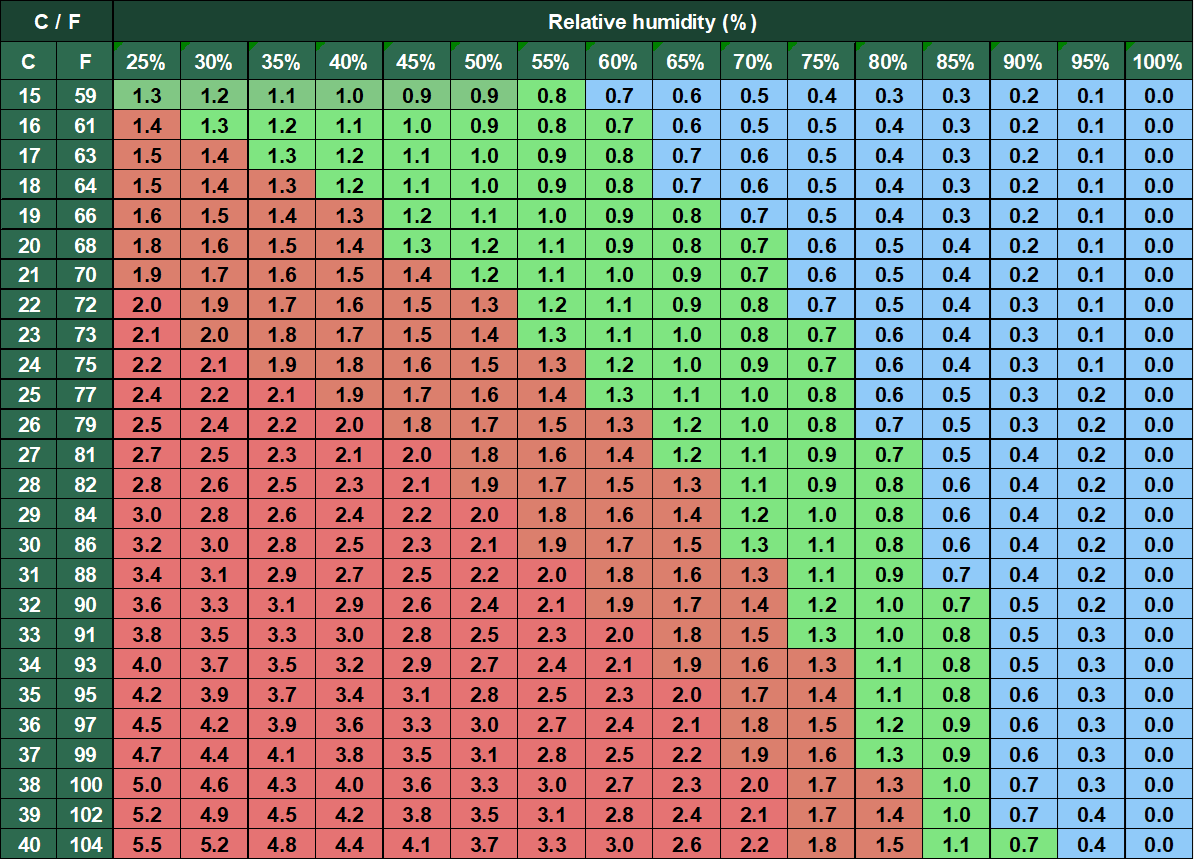
1. Using VPD Charts (Psychrometric Charts)
VPD can be easily determined using a Psychrometric Chart, which is a graphical representation of the relationship between:
- Temperature
- Relative Humidity
- Moisture content of air
In greenhouse and polyhouse farming, simplified versions of these charts are commonly referred to as VPD Charts.
2. Using Online VPD Calculators and Tools
Today, most farmers and agronomists prefer digital tools for faster and more accurate results.
You can calculate VPD using:
- Online VPD calculators
- Mobile applications
- Greenhouse climate control systems
These tools require only:
- Temperature
- Relative Humidity
Conclusion
Vapor Pressure Deficit (VPD) is one of the most important yet often overlooked factors in polyhouse farming and Controlled Environment Agriculture (CEA). Instead of managing temperature and humidity separately, VPD gives a more accurate understanding of how plants actually respond to their environment.
By maintaining the right VPD:
- Plants achieve better transpiration balance
- Nutrient uptake improves
- Disease risks are significantly reduced
- Overall yield and crop quality are enhanced
Whether you calculate VPD manually, use a VPD chart (psychrometric chart), or rely on modern digital tools, the goal remains the same—creating an optimal growing environment for plants.