
Introduction:
In modern blueberry cultivation systems, harvesting and post-harvest management are just as important as crop production. Ensuring high fruit quality after harvest is critical, as factors like freshness, firmness, and aroma directly influence market acceptance and profitability.
Improper pre- and post-harvest practices can result in 20% to 50% post-harvest losses, making effective management essential for commercial success.
Importance of Maturity at Harvest
Maturity is the most critical factor determining the quality and shelf life of blueberries. Unlike some crops, blueberries do not improve in quality after harvest. Therefore, fruits must be harvested at the correct stage of maturity.
- Immature fruits are more prone to bruising and poor flavor.
- Overripe fruits are highly susceptible to decay and reduced shelf life.
- Optimally matured fruits offer better firmness, flavor, and storage life
Harvesting at the right stage ensures superior organoleptic properties and reduces losses.
Pre-Harvest Factors Affecting Fruit Quality
Several pre-harvest practices play a crucial role in determining post-harvest quality:
Selection of suitable cultivars
Timely fungicide application
Proper pruning to maintain an open canopy for Improved air circulation and spray coverage
These practices help in reducing disease pressure and improving fruit quality before harvest.
Post-Harvest Management Practices
- Rapid cooling immediately after harvest (most critical step)
- Storage at low temperatures
- Use of modified atmosphere packaging (MAP)
- Careful sorting and culling of damaged fruits
Some of the most common post-harvest diseases affecting blueberries include:
- Anthracnose (Colletotrichum spp.)
- Grey mould rot (Botrytis cinerea)
- Alternaria rot (Alternaria spp.)
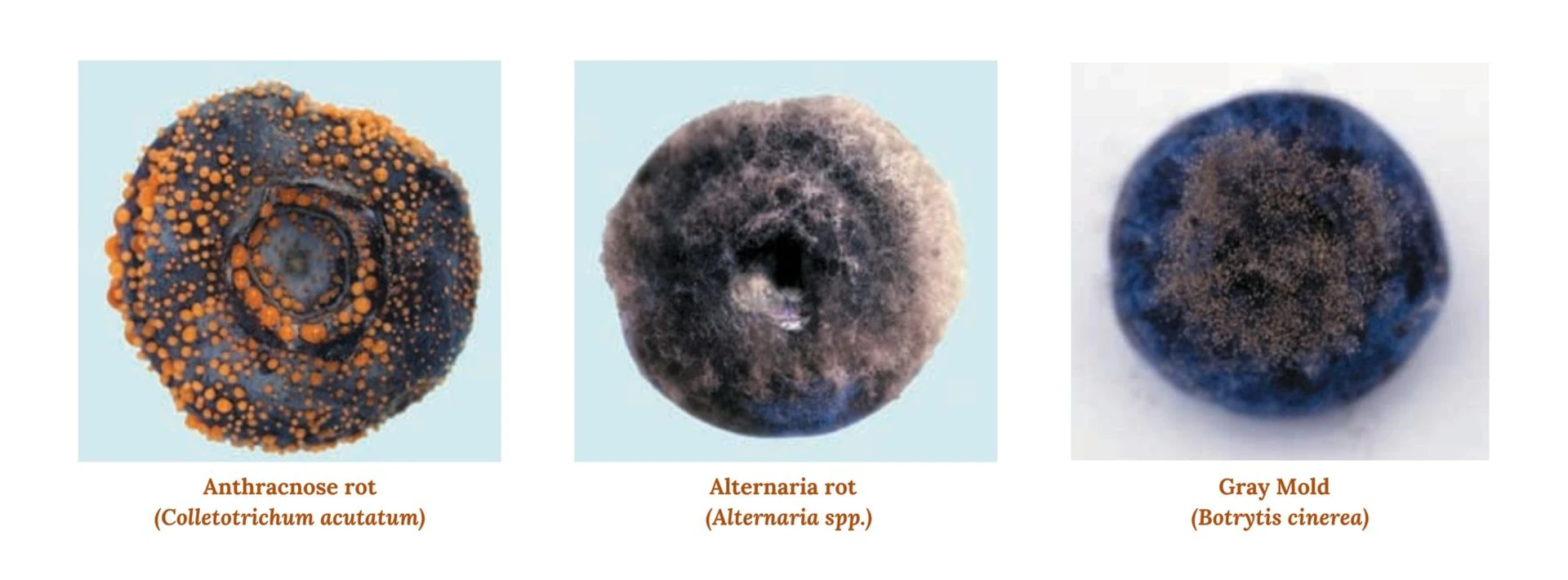
Effective disease management through pre- and post-harvest practices is essential to minimize losses.
Understanding Harvesting & Post Harvesting in Berries
Harvesting in the Field
Blueberry harvesting should be carried out early in the morning, after the dew has dried, to avoid surface moisture that can promote decay.
Only fruits that have reached the optimum maturity stage should be harvested to ensure the best quality and shelf life.
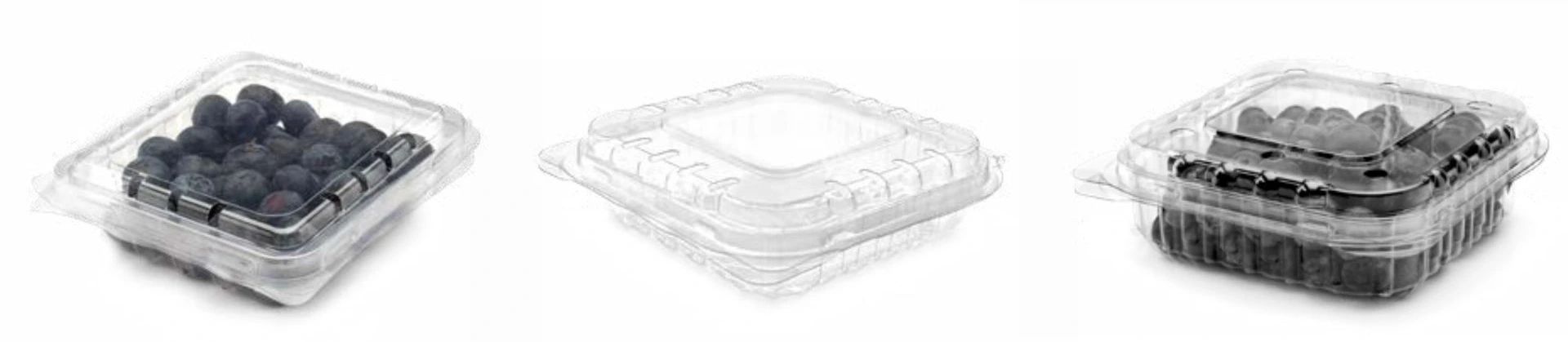
Placing fruits directly into retail punnets at the time of harvest is highly recommended, as it minimizes post-harvest bruising and handling damage. Commonly, retail punnets of 125–170 grams are used for fresh market sales.
Post-Harvest Conditions
Maximizing fruit quality and extending shelf life is essential for accessing premium and distant markets.
Post-harvest management focuses on slowing down the natural degradation process and limiting the development of decay.
Key Principles of Post-Harvest Management:
Fruit remains alive and responsive to environmental conditions
Fruit quality cannot improve after harvest
Major Causes of Post-Harvest Losses:
Decay (fungal infections)
Physiological breakdown
Physical damage or bruising
Dehydration
Fresh blueberries should ideally be stored at temperatures close to 0°C with 90–95% relative humidity to maintain quality.
Cooling After Harvest (Pre-Cooling)
Cooling is the most critical step in blueberry post-harvest management.
Immediately after harvest, fruits should be kept in shaded or temperature-controlled areas to avoid heat buildup.
Pre-cooling is typically done using forced air cooling systems, where fruit temperature is reduced from 20–25°C to 0–2°C within 60–90 minutes.
Rapid cooling:
Reduces metabolic activity
Slows down softening
Minimizes decay incidence
Proper pre-cooling can increase shelf life by 8–10 times compared to non-cooled fruits.
Cold Storage
After pre-cooling, blueberries should be stored under controlled conditions.
Temperature: 0–1°C
Relative Humidity: 90–95%
The FIFO (First In, First Out) principle should always be followed to maintain product rotation and quality.
Under ideal storage conditions, blueberries can be stored for up to 2–3 weeks.
The critical freezing temperature for blueberries is around -1.3°C, and fruits with higher soluble solids are less prone to freezing damage.
It is important to note that different cultivars behave differently in storage due to genetic variations.
Packaging and Labeling
Proper packaging plays a crucial role in maintaining fruit quality and reducing mechanical damage during handling and transport.
Packaging Practices:
Use ventilated clamshell punnets (125–170 g)
Ensure proper air circulation to avoid condensation
Use food-grade, sturdy materials to prevent crushing
Refrigerated Transport to Destination
Refrigerated trucks with continuous temperature control are used .
Temperature range: 0–2 °C, relative humidity 90–95%.
Door openings should be minimized to avoid temperature fluctuations.