
Introduction to Blueberry Farming in India
Current market demand
The demand for blueberries in India is increasing rapidly as consumers are becoming more health conscious after the COVID era. Blueberries are considered a superfood packed with antioxidants, vitamins, and minerals, which is directly increasing their consumption in the Indian market.
This growing demand is reflected in the increasing imports of fresh blueberries into India. Currently, India imports most of its fresh blueberries from countries such as Peru, Chile, and the USA. According to a source India currently imports around 3000 MT of blueberry every year.
Growth of the Premium Fruit Segment
As India’s middle class continues to rise and disposable incomes increase, the demand for premium fruits such as blueberries, raspberries, strawberries , kiwi, apples, and avocados is also increasing rapidly. According to sources, blueberry demand in India is projected to grow at 18% CAGR through 2028, driven mainly by health-conscious consumers.
Most of this demand is currently concentrated in Tier 1 and Tier 2 cities and is gradually continuing to expand into Tier 3 as well. This growing premium fruit market presents strong opportunities for farmers, agri-investors, and FPOs to invest in blueberry farming in India.
What Is Protected Blueberry Cultivation?
High tunnel cultivation
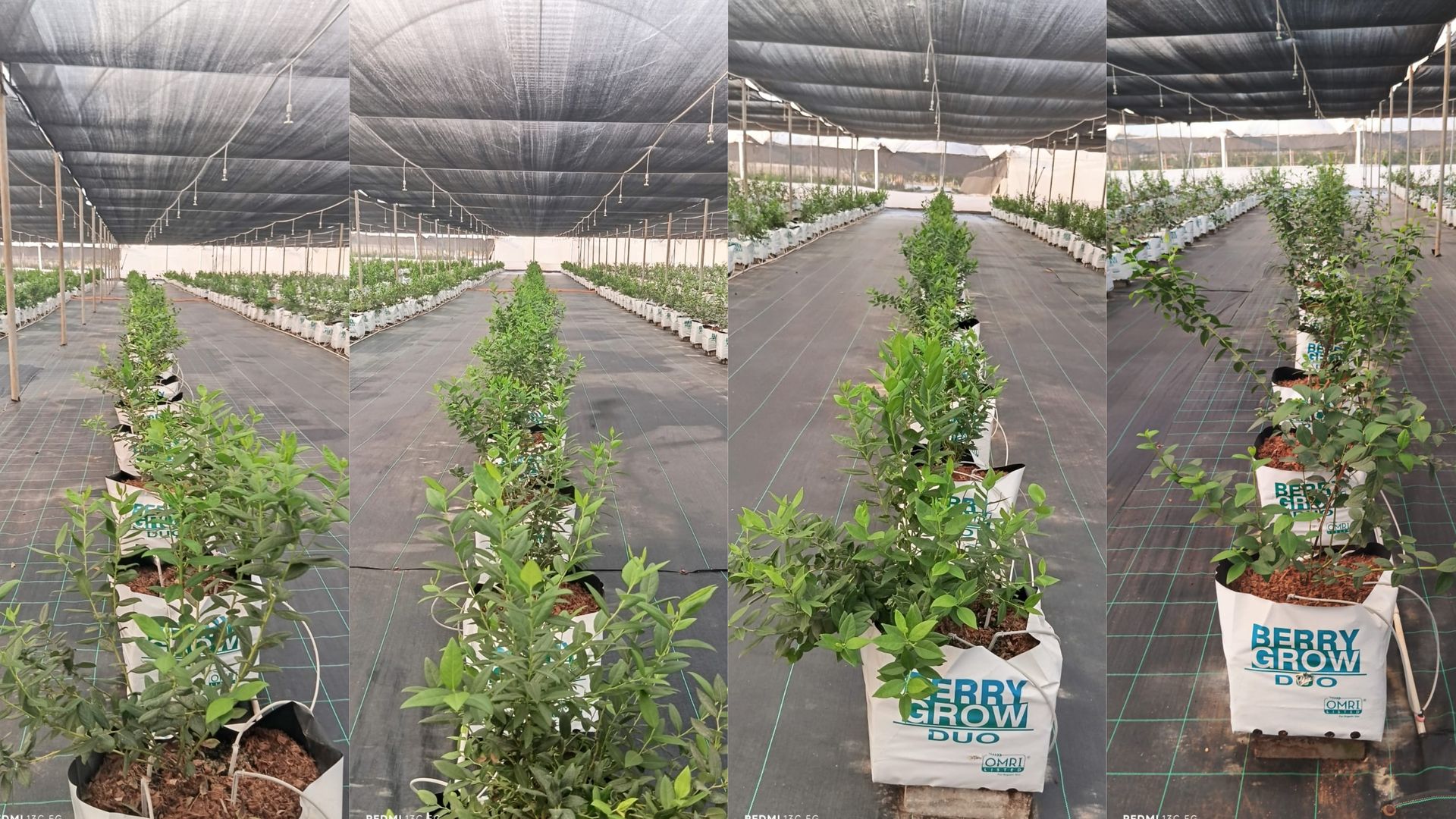
High tunnels are passively ventilated, semi-intensive polyhouse structures commonly used for blueberry cultivation in India and across the world. These structures provide a practical and economically viable solution for blueberry farming.
The main objective of high tunnels is to protect blueberry plants from climatic adversities such as unseasonal rainfall, high temperatures, and excessive humidity, while at the same time providing moderate control over the microclimate to achieve optimum plant growth and production.
Substrate growing systems
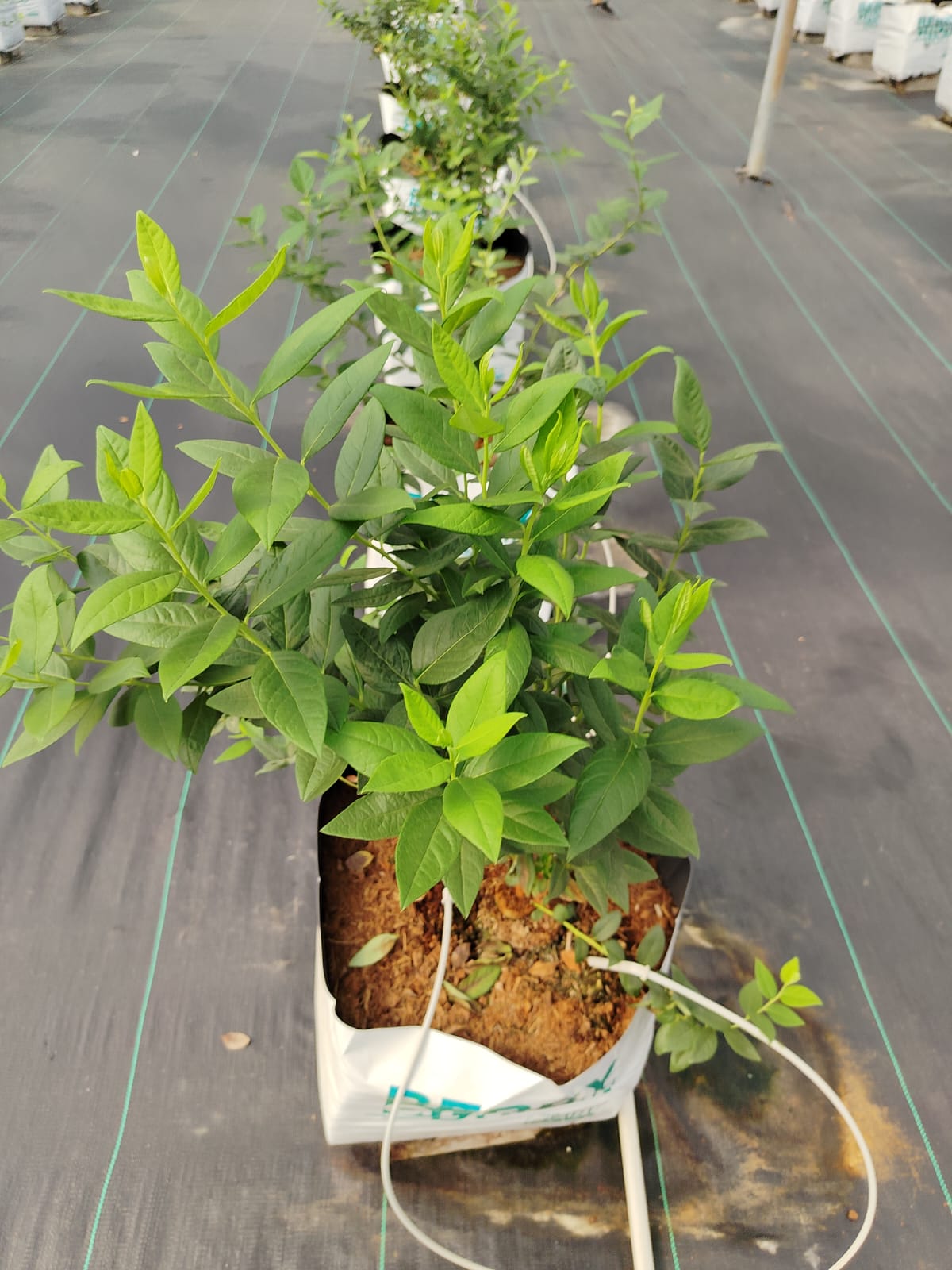
Blueberries require acidic growing media for optimum growth and development. They grow well in media with a pH range of 4.5 to 5.5. Since such acidic soil conditions are rarely available naturally, blueberries are preferably grown under substrate-based cultivation systems.
This system involves the use of different substrate combinations prepared using materials such as cocopeat, perlite, coco chips, vermiculite, and peat moss.
Commonly used substrate mixes include:
- 50% coco coir (15–20% fibre) + 25% white peat + 25% perlite
- 50% coir pith + 25% white block peat + 10% short coir fibre + 15% perlite
One of the major benefits of substrate-based cultivation is that it provides greater flexibility compared to conventional soil cultivation. It allows better management of drainage, pH balance, EC, and salt concentration, while also reducing the risk of soil-borne diseases. Additionally, it provides flexibility to increase or decrease plant density depending on the age and growth habit of the plants.
Advantages of Protected Blueberry Farming
High tunnel structures play a crucial role in modern blueberry farming in India under protected cultivation systems. In blueberries, flowering typically begins around October, a period when several regions in India experience unseasonal and erratic rainfall events. These unpredictable climatic conditions can severely damage delicate blueberry blossoms, leading to poor fruit set, reduced yield, and quality losses. Therefore, protecting blueberry plants during the flowering stage from such climatic adversities becomes critical for stable and profitable production.
Protected cultivation systems, such as high tunnels and polyhouses, provide an effective barrier against unseasonal rainfall, thereby ensuring better flower retention and improved fruit development. This controlled environment significantly reduces crop losses and enhances consistency in production.
In addition to rainfall protection, high tunnel structures also play an important role in managing light intensity, which is a key factor in blueberry physiology. During peak summer months in India, solar radiation exceeds 100,000 lux, which may cause stress, leaf scorch, and reduced photosynthetic efficiency. High tunnels combined with shade net systems help regulate light intensity, creating an optimal microclimate for healthy plant growth and fruit development.
Furthermore, modern protected cultivation systems equipped with fogging and misting technologies enable precise humidity and Vapour Pressure Deficit (VPD) management. Maintaining optimal humidity levels is essential for blueberry plants, as it directly influences transpiration rates, flowering success, and overall plant vigor. Controlled VPD conditions ensure better physiological balance, leading to improved berry quality and higher productivity.
This also helps in extending the blueberry cultivation season, allowing growers to plan and stagger production more effectively. It results in uniform berry size and improved overall fruit quality due to controlled environmental conditions. Such consistency in production leads to higher market value and better price realization in both domestic and premium fruit markets. Ultimately, protected cultivation enhances profitability in blueberry farming in India through stable and high-quality yields.
Overall, high tunnel-based protected cultivation integrates climate protection, light regulation, and atmospheric control, making it a highly effective system for successful commercial blueberry farming in India.
Conclusion
Protected cultivation is rapidly transforming blueberry farming in India by providing a stable and controlled growing environment. High tunnel systems help protect crops from unseasonal rainfall, extreme heat, and high light intensity, while also enabling better humidity and VPD management. This results in improved flowering, uniform berry size, better fruit quality, and higher market returns.
If you are planning to start or scale blueberry cultivation in India, adopting protected cultivation systems can significantly improve productivity, quality, and overall profitability. Get in touch to explore modern blueberry farming solutions and turnkey project support.