
Introduction:
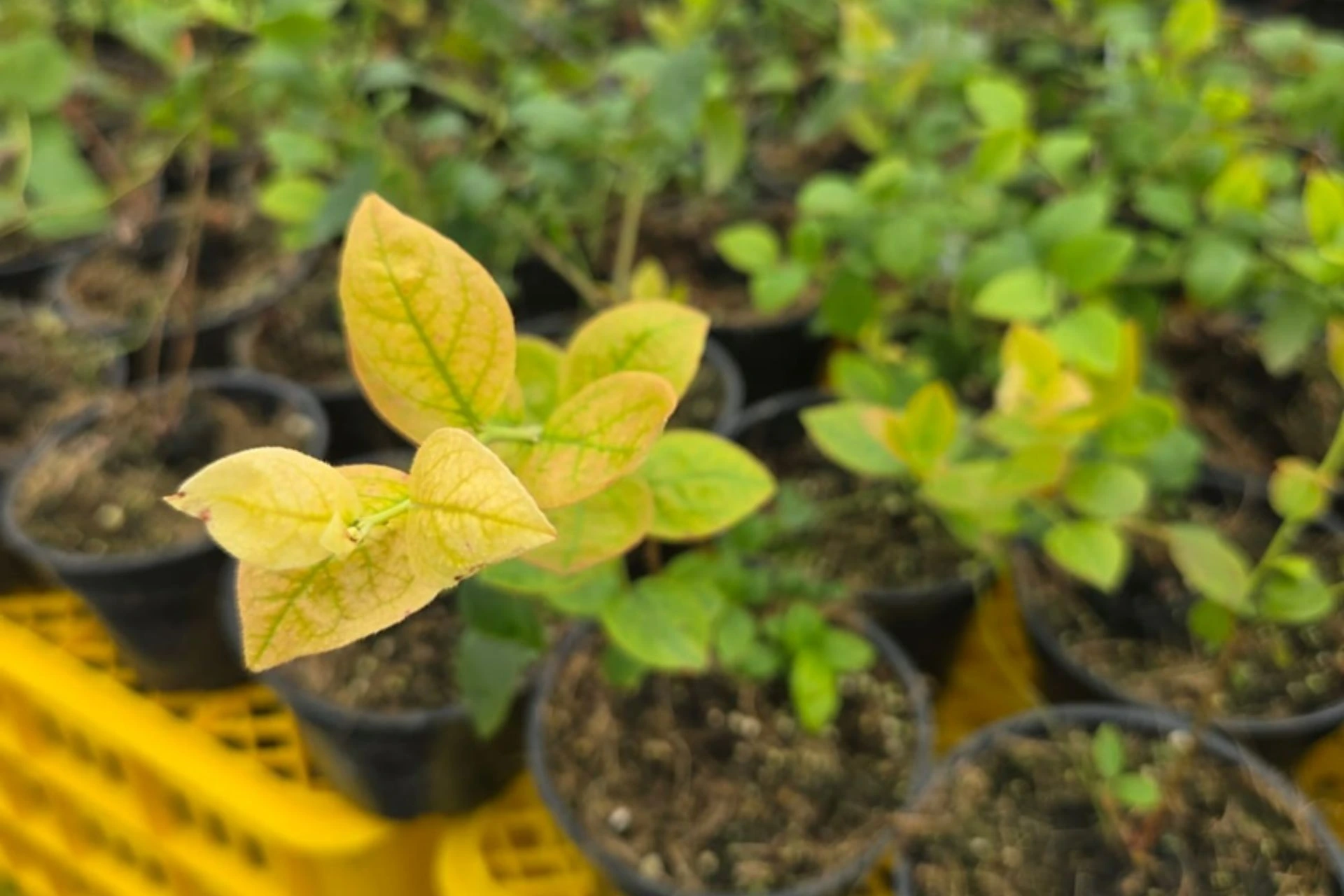
Blueberry farmers know the warning signs all too well -young leaves turning bright yellow while the veins remain sharply green. What begins as mild discoloration can rapidly spread across an entire block, reducing vigor, suppressing canopy development, and weakening overall plant performance.
In most cases, this problem is diagnosed as iron deficiency in blueberries. But here’s the critical reality many growers overlook: Even when iron is physically present in the root zone, blueberry plants often struggle to absorb and utilize it under unfavorable root-zone conditions. Left unmanaged, iron chlorosis can significantly reduce photosynthesis, stunt vegetative growth, lower berry size, and directly impact yield potential.
For commercial blueberry farming in grow bags, coco coir, peat substrates, or protected cultivation environments, understanding the true cause of iron lock-up is essential for maintaining crop performance. This is especially critical in countries like India, where agronomic knowledge and skill sets for blueberries still remain underdeveloped.
Why Blueberries Are Naturally Vulnerable to Iron Deficiency
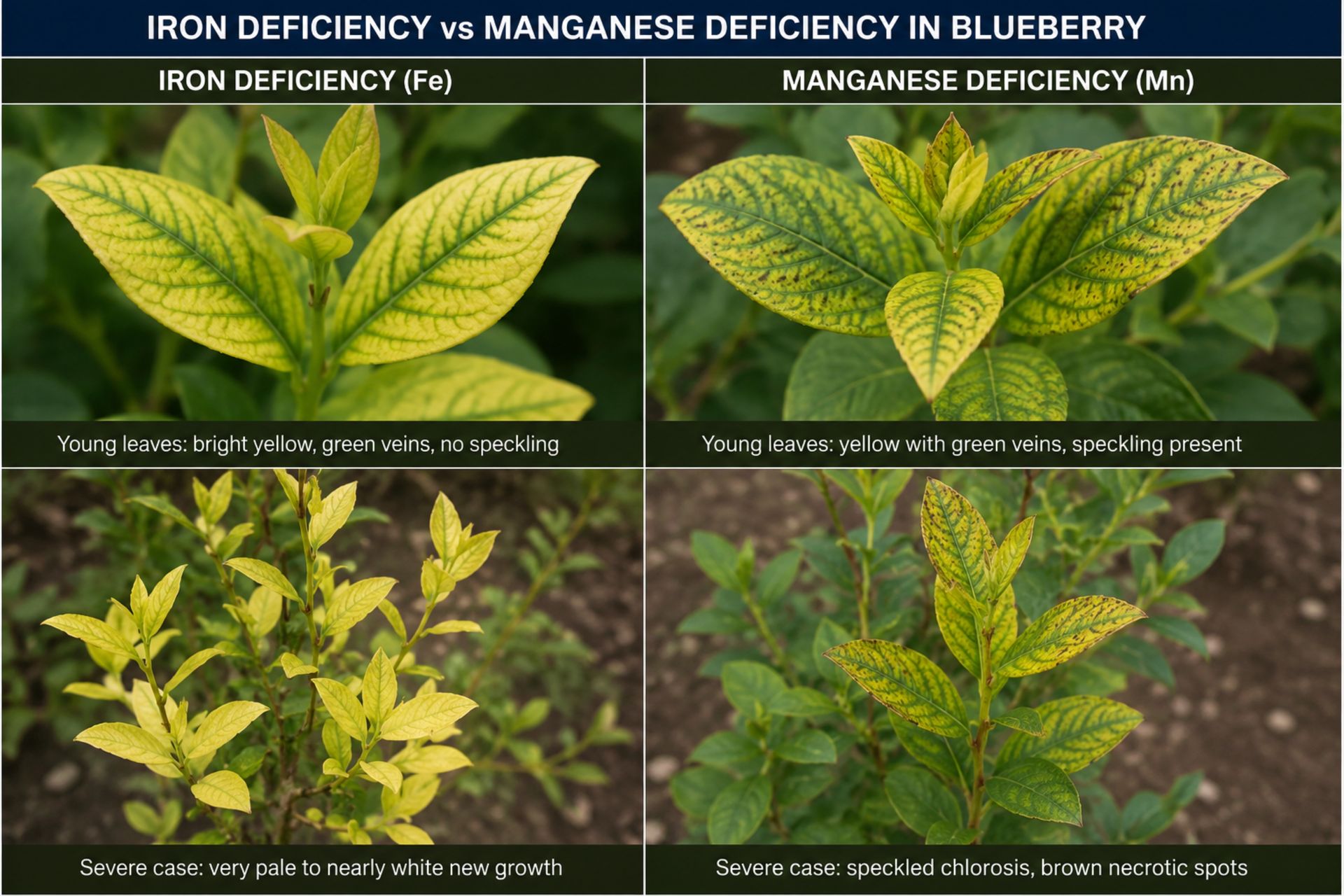
Fe deficiencies are common in blueberries. The margins of young leaves in Fe-deficient plants become chlorotic while the veins remain green. As the deficiency progresses, leaves become brown or bronze-gold and may drop. Fe deficiency symptoms differ from those caused by Mg deficiency in that the main veins and many minor veins remain green in Fe-deficient leaves. Shoot growth and leaf size are often reduced. Symptoms of Fe deficiency are generally the first indicator of high substrate or soil pH (>5.5) . Rather than lack of Fe in the substrate , it is the high pH which makes Fe unavailable to the plant. The deficiency has also been associated with soil or substrates that are saturated, poorly drained, or have very high Mn or P level.
A Root System Designed for Sensitivity
Blueberries also possess a highly specialized root architecture: as they have the Extremely fine fibrous roots ,Very shallow root distribution, Minimal or absent root hairs, Low nutrient interception capacity Because of this limited root surface area, blueberries respond very aggressively to the root zone saturation, oxygen deficiency , substrate compaction , high bicarbonates, poor drainage , or cold substrate temperatures , that's why iron deficiency are often linked more to root-zone management than fertilizer dosage itself.
The Main Reasons Behind Iron Deficiency in Blueberries
High Root-Zone pH
Blueberries require a highly acidic root zone to absorb iron efficiently. When the substrate or soil pH rises above 5.5, iron quickly becomes chemically unavailable even if enough iron is already present. This is why many growers observe yellow young leaves despite regular fertilization.
High Bicarbonates in Irrigation Water
One of the biggest hidden causes of iron chlorosis is bicarbonate-rich irrigation water. Excess bicarbonates continuously neutralize acidity around the roots, slowly increasing substrate pH and causing iron to precipitate into forms the plant cannot absorb. In many commercial systems, this is the primary reason behind chronic iron deficiency.
Poor Root Oxygen and Waterlogged Media
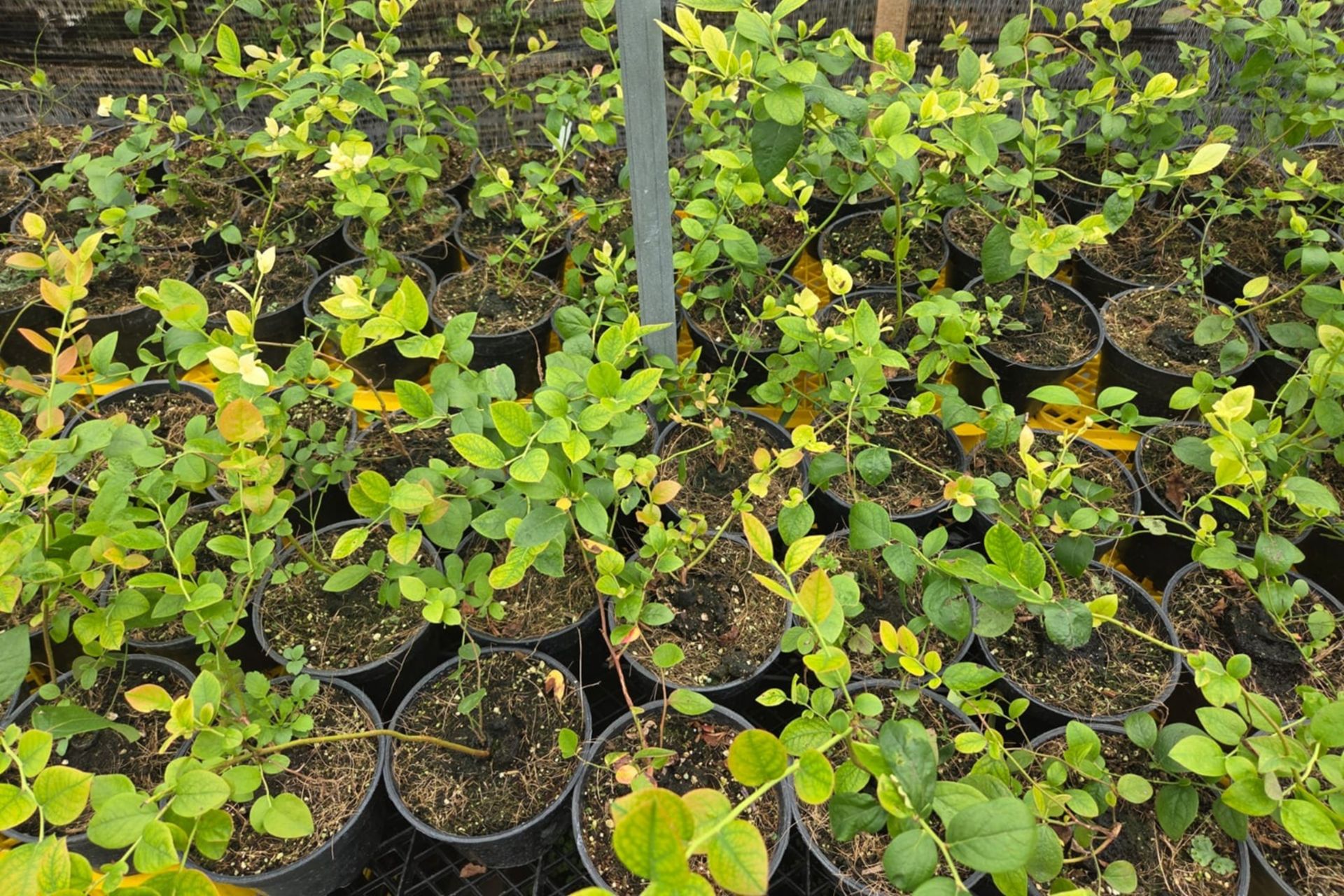
Blueberry roots are extremely sensitive to low oxygen conditions. When grow bags or substrates remain too wet for long periods, root respiration slows down and the plant loses its ability to actively absorb iron. Poor drainage, excessive irrigation, and compacted media commonly trigger this problem.
Overwatering and Poor Irrigation Management
Frequent over-irrigation keeps the root zone constantly saturated, reducing oxygen availability and weakening nutrient uptake efficiency. In blueberries, improper irrigation management is one of the most common indirect causes of recurring iron chlorosis.
Apart from these there are many other reasons which causes the iron lockout such as cold root zone temperatures, weak natural iron uptake ability, very shallow iron uptake ability, unbalanced fertigation schedule with nitrate dominated source of nitrogen etc.
How to Prevent Iron Deficiency
The most efficient and effective way to correct the Fe deficiency is the to adjust the soil or substrate pH. 2-3 foliar applications of the Fe chelates are also recommended. A addition of surfactant is necessary to enhance the penetration through waxy cuticle of blueberry. Since there are many formulations of chelates, rate must be adjusted according to the product concentration,
Conclusion
Iron deficiency in blueberries is rarely a simple shortage of nutrients-it is almost always a symptom of deeper root-zone imbalance. Factors like rising pH, bicarbonate-rich irrigation water, poor oxygen availability, cold conditions, and the plant’s naturally weak iron uptake system all combine to restrict iron from becoming truly available to the roots. This is why chlorosis often persists even after repeated iron applications.
For consistent crop performance, the focus must shift from “adding more iron” to managing the chemistry and biology of the root zone itself. When pH is stabilized in the acidic range, bicarbonates are controlled, and root health is protected through proper aeration and irrigation practices, iron uptake becomes naturally efficient again.
In short, solving iron deficiency in blueberries is not about aggressive correction-it is about precision management. Growers who understand and control these underlying factors will see stronger canopy development, healthier green foliage, and ultimately, more reliable yield and fruit quality season after season.