
The Importance of Trellising Systems in Raspberry Cultivation
Raspberry cultivation has emerged as one of the most profitable sectors in modern berry farming due to the growing global demand for premium-quality berries. However, achieving consistent yield, superior fruit quality, and efficient crop management requires more than just proper irrigation and fertigation practices. One of the most critical components of successful raspberry production is the implementation of an effective trellising system.
In commercial raspberry farming, trellising is not simply a support structure; it is a strategic cultivation practice that directly impacts plant health, fruit quality, disease management, labor efficiency, and overall farm profitability. Whether raspberries are cultivated in open fields, polyhouses, or hydroponic systems, a properly designed trellis system plays a vital role in maximizing production efficiency.
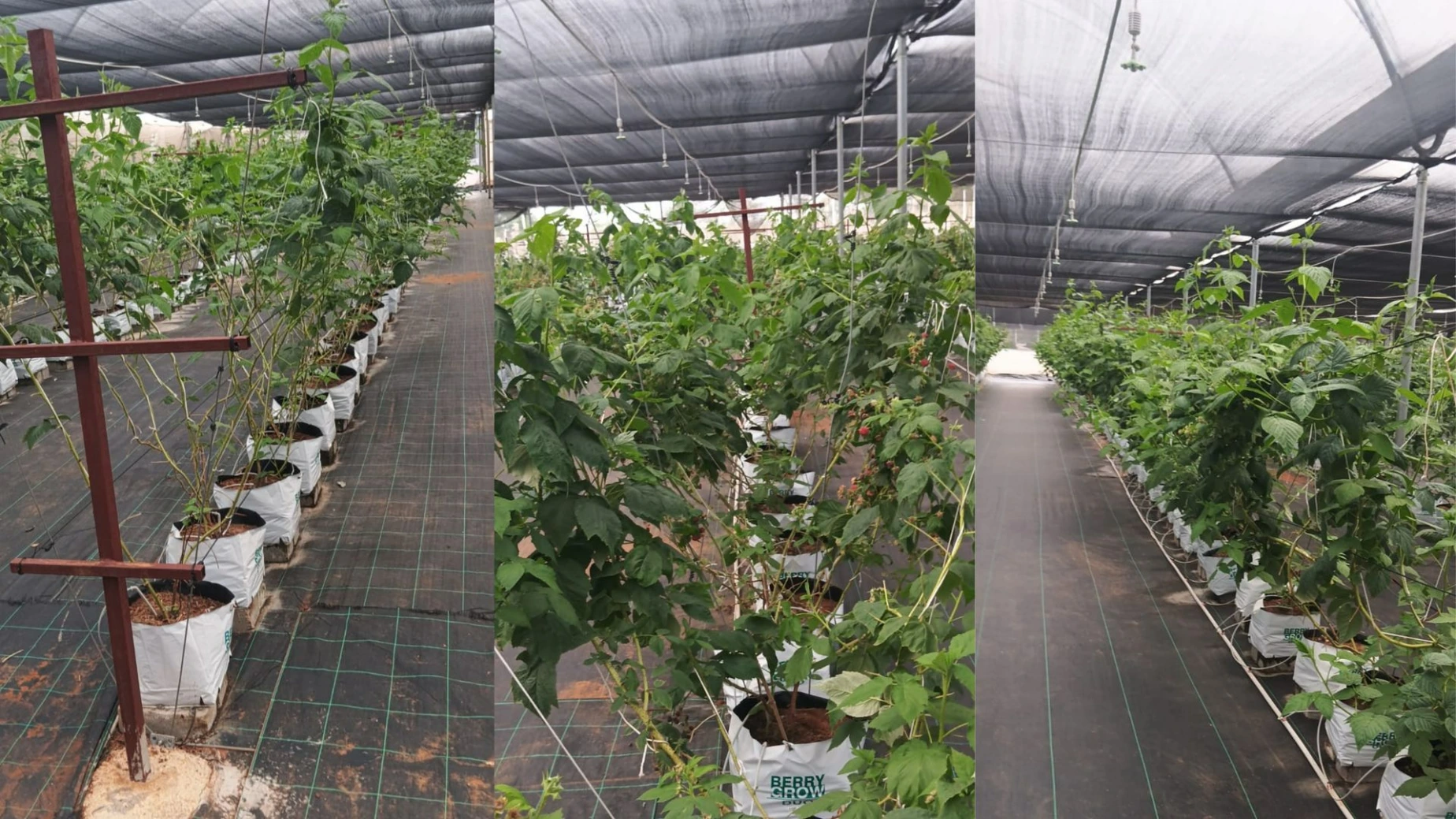
Understanding Trellising Systems in Raspberry Farming
Raspberry plants naturally produce long, flexible canes that tend to bend or spread irregularly during vegetative growth and fruiting stages. Without structural support, these canes often collapse under fruit weight, resulting in poor canopy management, fruit damage, reduced airflow, and harvesting difficulties.
Raspberry plants naturally produce long, flexible canes that tend to bend or spread irregularly during vegetative growth and fruiting stages. Without structural support, these canes often collapse under fruit weight, resulting in poor canopy management, fruit damage, reduced airflow, and harvesting difficulties.
A raspberry trellising system typically consists of:
- Support posts
- Galvanized wires
- Clips or ties
- Vertical or horizontal support frameworks
The primary objective of trellising is to maintain organized plant architecture while optimizing light distribution, air circulation, and crop accessibility.
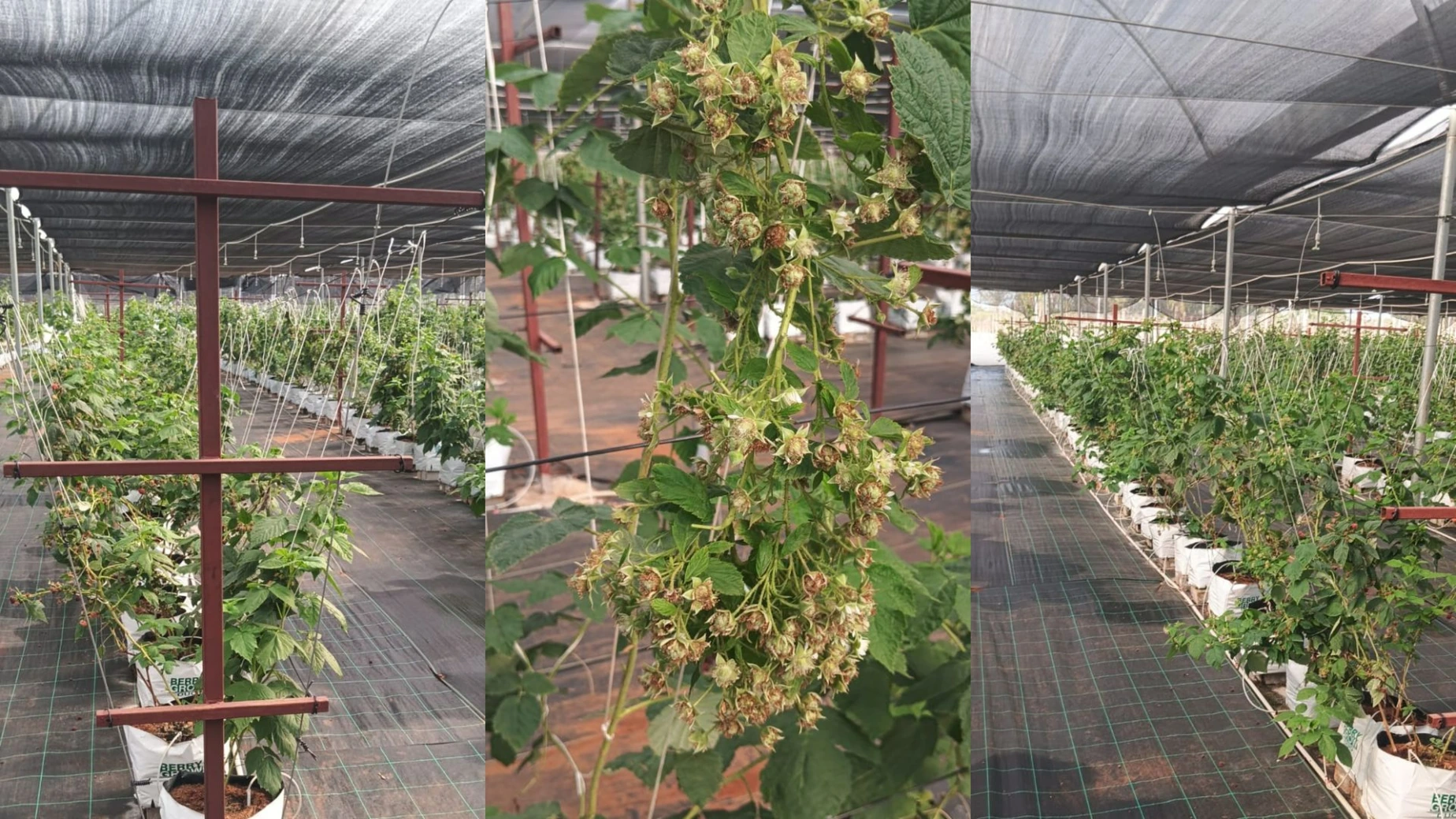
Enhancing Plant Growth and Cane Management
One of the major advantages of trellising systems is improved cane organization and structural stability. Proper support prevents canes from lodging and allows plants to grow in a controlled and upright manner.
An efficient trellis system helps growers:
- Maintain uniform row structure
- Separate fruiting and vegetative canes
- Reduce cane breakage
- Improve canopy management
- Encourage healthy vegetative development
Better Air Circulation and Disease Prevention
Disease management remains a major challenge in raspberry cultivation, particularly under humid climatic conditions and protected cultivation environments. Poor airflow within dense canopies creates favorable conditions for fungal diseases such as:
- Botrytis fruit rot
- Powdery mildew
- Cane blight
- Anthracnose
A properly designed trellising system enhances ventilation throughout the crop canopy, helping to reduce humidity accumulation around leaves and fruits.
Easier Harvesting and Labor Efficiency
Labor management is a critical economic factor in commercial raspberry production. Harvesting raspberries from unmanaged canopies is labor-intensive and often leads to fruit bruising and reduced picking efficiency.
Trellising systems simplify harvesting operations by:
- Improving fruit visibility
- Creating easier worker access
- Reducing harvesting time
Minimizing fruit handling damage
In greenhouse and polyhouse raspberry production systems, trellising becomes even more essential due to increased planting density and controlled environmental conditions.
Protected cultivation systems require:
- Efficient vertical space utilization
- Optimized airflow management
- Better disease prevention
- Precision crop management
Conclusion
Trellising systems have become an indispensable component of modern raspberry cultivation. Beyond providing structural support, trellising significantly improves plant health, crop management efficiency, fruit quality, disease control, and overall productivity.
As commercial berry farming continues to evolve toward high-density and protected cultivation systems, advanced raspberry trellising practices will play an increasingly important role in achieving sustainable and profitable production.
For growers aiming to maximize yield, improve fruit quality, and enhance operational efficiency, investing in a well-designed raspberry trellising system is not an option—it is a necessity.