
Introduction
Strawberry farming in India is rapidly emerging as a highly profitable agribusiness due to rising consumer demand, attractive market prices, and its suitability for both open-field and protected cultivation. Once considered a temperate fruit, strawberries are now successfully grown across many Indian states including Maharashtra, Punjab, Tamil Nadu, Karnataka, Himachal Pradesh, Bihar, and the North-East, using improved varieties and modern farming techniques.
With proper planning and management, farmers can earn excellent returns within a short cropping cycle of 4–5 months. Strawberry cultivation is well suited for small and marginal farmers, polyhouse growers, and agri-entrepreneurs.
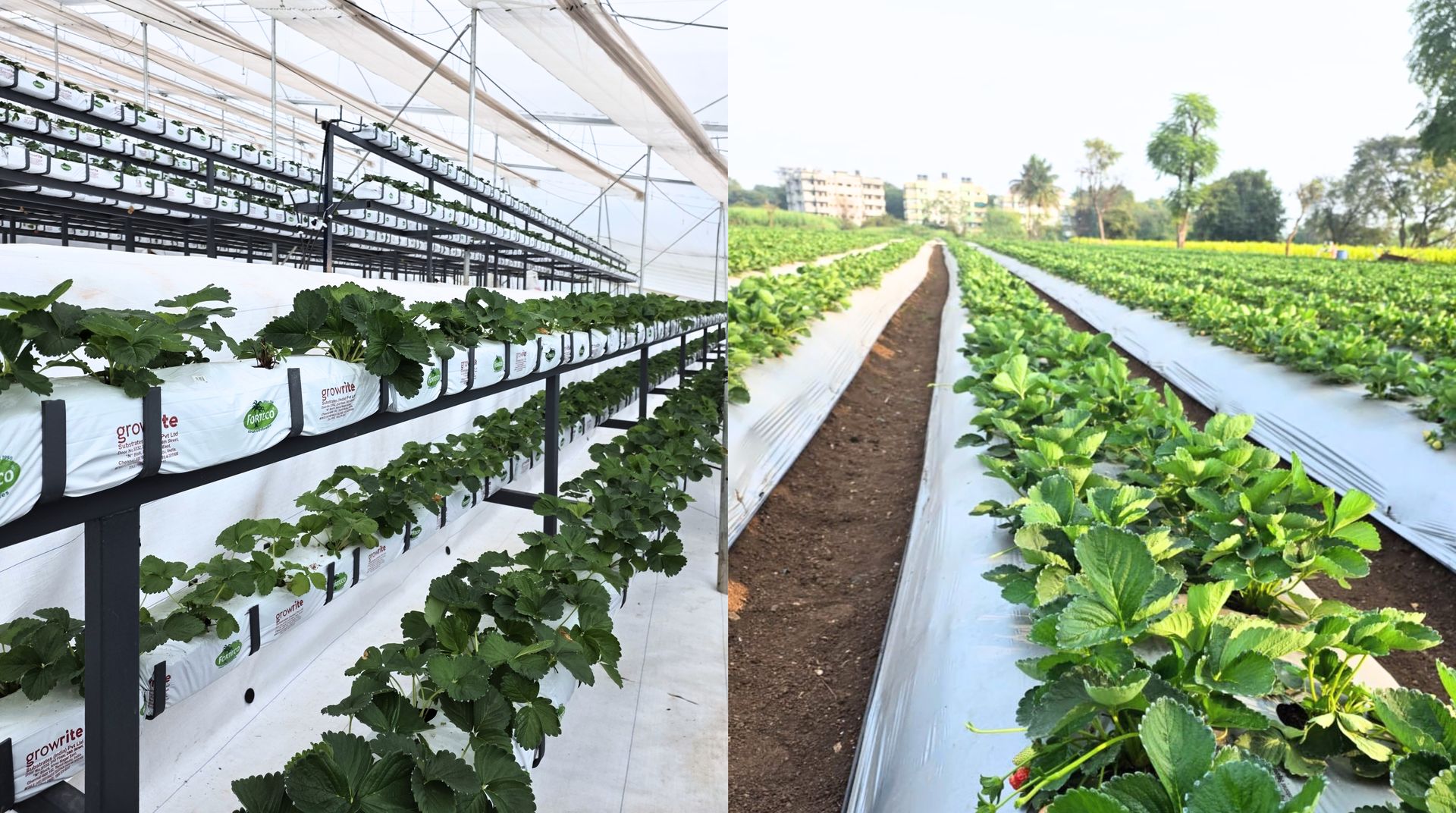
This complete guide explains strawberry farming in India step by step, covering climate, varieties, planting methods, irrigation, pest and disease management, harvesting, and yield.
Why Strawberry Farming is Gaining Popularity in India
Strawberry farming is expanding rapidly across India due to its strong market demand and high profit potential.
Key reasons for its growing popularity include:
- High demand from hotels, bakeries, ice cream industries, and fresh fruit markets
- Premium market price compared to traditional fruits
- Short crop duration with quick financial returns
- Suitable for both polyhouse and open-field cultivation
- High yield per acre under proper crop manage Management
Climate and Soil Requirements for Strawberry Farming
Ideal Climate for Strawberry Cultivation
Strawberries grow best in a cool and mild climate. Proper temperature is essential for healthy growth, flowering, and fruit quality.
The ideal temperature range for strawberry cultivation is:
- Temperature: 18°C to 25°C
- Relative Humidity (RH) 60-75%
Excessive heat reduces fruit size, color, and sweetness, while frost can damage flowers and reduce yield. Therefore, strawberries perform best in regions with mild winters and moderate day temperatures.
Best Soil for Strawberry Farming
Strawberries grow well in well-drained sandy loam soil rich in organic matter. Good soil structure is essential for healthy root development and disease prevention.
Key soil requirements include:
- Ideal soil pH: 5.5 to 6.5
- Well-drained soil to avoid waterlogging
- Loose and fertile soil for better root growth
Poor drainage increases the risk of root rot and fungal diseases, making proper field preparation essential before planting.
Best Strawberry Varieties for Indian Conditions
Choosing the right variety is critical for successful strawberry farming. Varieties must be well adapted to Indian climate conditions and market preferences to ensure high yield and quality.
Some of the best strawberry varieties grown successfully in India include:
Felicity®, Brilliance™, Fortuna™, Beauty™, Sensation™, Winter Dawn™, Palmeritas®, Leticia®, and Florida Pearl®.
When Is the Best Time to Plant Strawberries in India?
Strawberries are highly sensitive to temperature and day length. They require a cool climate during flowering and fruit development. Therefore, planting must be planned in such a way that the main flowering and fruiting period coincides with favourable winter temperatures.
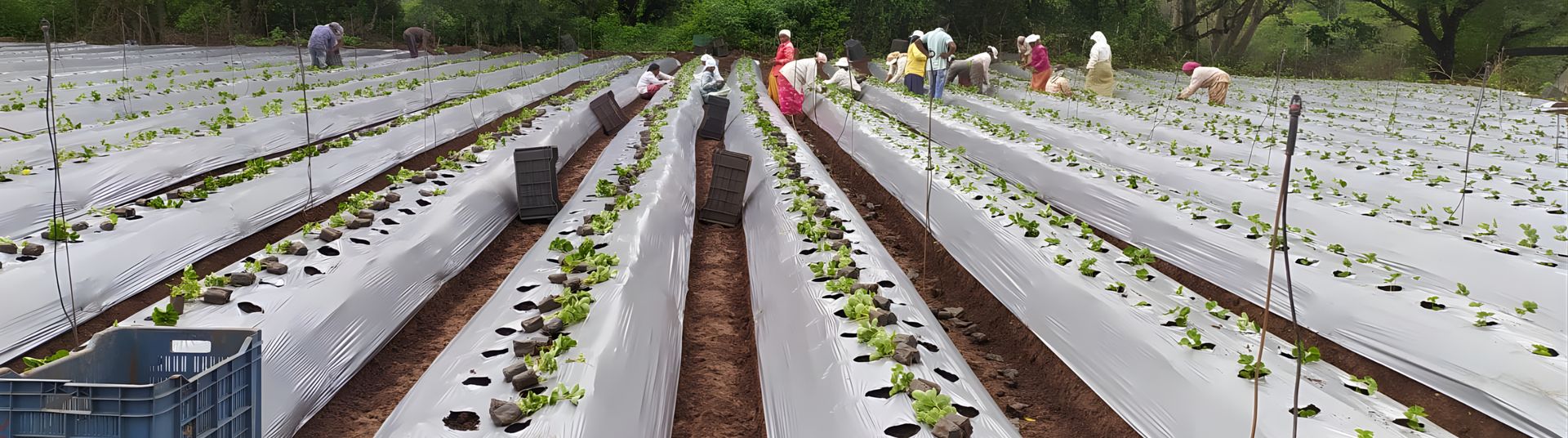
In India, strawberry planting is mainly influenced by:
- Local climate conditions
- Onset and withdrawal of monsoon
- Winter temperature pattern
- Target market timing
Timely planting ensures strong root establishment, early flowering, uniform fruiting, and higher market prices. Usually plating is carried out in the months of September to October depending upon the suitability of climate.
How to Buy Strawberry Plants in India?
Buying high-quality strawberry plants is one of the most important steps in successful strawberry farming. Poor-quality plants result in low yield, disease problems, and financial loss. Farmers should always purchase strawberry plants from reliable and certified suppliers.
Land Preparation
Key steps include:
Deep ploughing to remove weeds and loosen soil
Preparation of raised beds for better drainage
Use of plastic mulch to control weeds and retain soil moisture

Planting Method and Spacing
Recommended planting practices:
Spacing: 30 cm × 30 cm between plants
Plant crowns at soil level, not too deep or too shallow
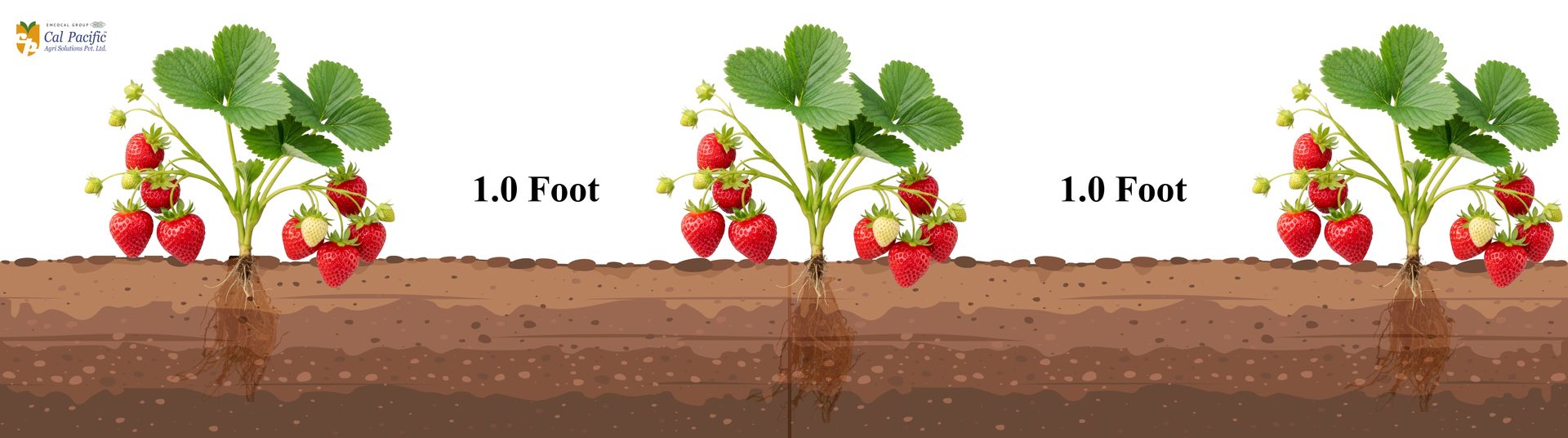
Correct spacing improves air circulation, reduces disease risk, and supports better fruit development.
What Are the Major Pests and Diseases in Strawberry Farming?
Effective pest and disease management is essential for maintaining healthy plants and achieving high yields in strawberry cultivation.
Major Pests in Strawberry Farming
Common insect pests that affect strawberry crops include:
Aphids
Thrips
Spider mites
Whiteflies
These pests damage leaves, reduce plant vigor, and affect fruit quality if not controlled in time.
Major Diseases in Strawberry Farming
Some of the major diseases observed in strawberry cultivation are:
Powdery mildew
Root rot
Leaf spot
Anthracnose rot
Proper field sanitation, quality planting material, and timely crop protection measures help minimize crop losses.
Following basic sanitation practices, maintaining optimal plant spacing, using disease-free planting material, timely removal of infected plants, and adopting Integrated Pest Management (IPM) practices help minimize overall pest and disease pressure in the field.
At Cal Pacific Agri Solutions, we support farmers and growers with good agricultural practices to achieve better production with lower input costs and higher yield and produce quality.
Flowering, Fruiting, and Crop Care
Depending on the variety, agronomic practices, and nutrition management, strawberry plants begin flowering and fruiting approximately 55–65 days after planting. However, this period is not fixed, as factors such as temperature, crop management, and plant health significantly influence growth and production.
Proper crop care during this stage is essential to ensure uniform flowering, healthy fruit development, and higher overall yield.
Frequently Asked Questions (FAQ)
FAQ 1. Is strawberry farming profitable in India?
Answer. Yes, it is one of the most profitable fruit crops with high market demand.
FAQ 2.Can strawberries be grown organically?
Answer. Yes, using biofertilizers and organic pest control
FAQ 3. What is the best season to plant strawberries in India?
Answer. September to November (Depends upon climatic conditions)
Conclusion
Strawberry farming in India offers excellent income opportunities when done in correct manner. With the right variety, proper irrigation, pest management, and marketing strategy, farmers can earn high profits within a short period. As demand continues to grow, strawberry farming is becoming a smart choice for progressive Indian farmers.